FL-41 lenses: what they are, which tint to choose, and whether they can be photochromic or polarized
FL-41 is a rose-colored lens tint that mainly reduces blue and blue-green light, the light that often bothers people with migraine and light sensitivity the most. Glasses with these lenses are often called migraine glasses. In our workshop we can fit it into your own frames, with or without a prescription. We offer standard tint levels of 25, 50 or 85%, and anything in between on request. We can also make polarized or photochromic FL-41 lenses, with or without a prescription. Because these lenses often come down to very individual wishes, you can't order them through the configurator; we arrange the order by email, WhatsApp or the form at the end of this article.

What are FL-41 lenses?
FL-41 is the name of a specific rose-colored tint. It was developed in the UK in the early 1990s for people who found flickering fluorescent lights in offices and schools tiring. That's where the "FL" in the name comes from.
FL-41 reduces the blue and blue-green part of the light the most, and less and less toward the red end of the spectrum. It hardly reduces orange and red light at all. It doesn't cut out blue light completely; it weakens it, and the darker the tint, the more it takes away. That's why you see normally, just with a rosy cast.
Why the blue-green part? Besides the cones and rods we see with, the retina has special cells containing a pigment called melanopsin. They are most sensitive to light around 480 nm, and researchers link them to pain from light in migraine. Cones are involved too, so the story isn't as simple as sellers sometimes make it sound. FL-41 reduces exactly the part of the spectrum that studies have linked to discomfort from light.
We have some experience with this in our own company. These lenses helped one of our colleagues a great deal with her headaches. Other customers have had similar experiences, but as we'll see below, that isn't necessarily down to the FL-41 color itself, because many people are already helped by lightly tinted ordinary lenses.
Who might FL-41 help?
FL-41 is most often needed by people who are bothered by light more than others (photophobia):
- people with migraine whose attacks are triggered or made worse by light,
- people with blepharospasm (involuntary eyelid closing),
- people after a concussion,
- people with dry eye or other eye conditions who are also sensitive to light,
- people who find working under bright LED or fluorescent lights tiring.
FL-41 doesn't treat the cause. Before getting these lenses, it's essential to see an ophthalmologist or neurologist first. FL-41 glasses can complement the treatment your doctor prescribes, not replace it.
What does research say about FL-41?
It's important to know that there are few studies and they are small. There is no large study that gives a clear answer for FL-41. But it isn't true that there are only individual anecdotes. These are the most important studies:
| Who | Study | What they found |
|---|---|---|
| Blepharospasm | 30 people, each wore FL-41 and a gray lens of similar darkness for two weeks (2009) | With FL-41 they read more easily, were less bothered by light and blinked less often than with the gray lens. |
| Migraine in children | 20 children, four months with a rose (FL-41) or a blue tint (1991) | With the rose tint, attacks dropped from about six to fewer than two a month; with the blue tint the drop was smaller. |
| Dry eye and eye pain | 25 people; brain activity in response to light was measured with and without an FL-41 lens (2024) | For 19, light was less unpleasant with FL-41, for 2 it was the same, for 4 it was worse. There was no comparison with a gray lens. |
| After a head injury | 46 people after a head injury and 46 healthy people (2026) | FL-41 and a gray lens made light equally tolerable; no advantage for FL-41 was found. |
What does this mean for you? FL-41 helps some people more than ordinary dark glasses, but not everyone. Nobody can know in advance, including us. That's why we didn't promise the customer with dry eyes who prompted me to write this article that it would help. She decided to start with one pair and see how it suits her. We recommend the same to you. We know that feeling your way in the dark like this to find some relief is expensive and time-consuming, but unfortunately there's no other way.
25, 50 or 85%: which tint should you choose?
The tint level tells you how strongly the lens is tinted. The higher it is, the darker the lens and the less light it lets through.
| Tint level | What it looks like | Where people wear it | Can people see your eyes? |
|---|---|---|---|
| 25% | Light pink, like lightly tinted glasses | Indoors, such as the office, shops and in front of screens | Yes, clearly |
| 50% | Distinctly orange-pink | In very bright rooms and outdoors on cloudy days | Yes, but the glasses are noticeably tinted |
| 85% | Dark red, like sunglasses | Outdoors, in the sun | Barely |

For indoors, most people start with 25%. A darker tint isn't automatically better. If you wear glasses that are too dark all day, your eyes get used to less light, and light can then bother you even more. Neuro-ophthalmologists who work with light sensitivity warn about this too. So only use dark tints outdoors in clear weather.
Do FL-41 lenses protect against UV light?
Yes. Genuine FL-41 lenses are UV400 by default: UV protection comes from the lens material and the pigment we tint it with. All our FL-41 lenses are made this way, even the lightest ones. So UV400 isn't an extra you should pay for separately. If someone offers it to you as an add-on to FL-41 lenses, it's a sign that they just want to charge you for something that should already be in the lens, or that their lenses aren't really FL-41 but simply tinted pink.
Can FL-41 lenses be photochromic?
Yes, with or without a prescription, but only at tint levels up to 40%. A photochromic lens, which darkens in the sun, can only be tinted additionally up to a certain limit: up to 40% on standard 1.5 index lenses, and up to 30% on 1.6 index lenses for stronger prescriptions. It can be done on standard photochromic lenses or on Transitions.
What to expect:
- Indoors the lenses will be slightly darker than a regular FL-41 lens of the same tint level. Every photochromic lens keeps some color indoors that it can't lose.
- Outdoors they darken like sunglasses. The rose FL-41 tint stays, but most of the color you see is actually the photochromic filter, not FL-41.
- You choose the color of the lens. We recommend brown or amber, as they're closest to the FL-41 tint. Standard photochromic lenses come in brown, gray and green. Transitions lenses come in brown, gray, green, amber, amethyst, emerald, sapphire and ruby.
- In the car most photochromic lenses don't darken, because the windshield blocks the UV light that triggers the darkening.
There are no studies on photochromic FL-41 lenses, so we can't confirm whether a photochromic base changes the effect of FL-41 in any way. Some people don't like photochromic lenses because it always takes time for them to darken and clear. Instead, they have two pairs, one for indoors and one for outdoors. It comes down to personal preference.
Can FL-41 be combined with polarization?
Yes, on a gray NuPolar polarized lens, and only at 25%. NuPolar is a brand of polarized lenses from the American manufacturer Younger Optics. We can make these lenses with or without a prescription.
A polarized lens removes glare from water, wet roads, snow and car windows. Outdoors, polarization will help you more against glare than photochromic FL-41. Polarized glasses aren't suitable indoors, because they're always dark.
As with photochromic lenses, we can't confirm whether a polarized base affects how FL-41 works.
In short, what to choose:
| Where light bothers you most | Our suggestion |
|---|---|
| Indoors, at a screen and under lights | FL-41 25% on a clear lens |
| Indoors and outdoors, you want one pair | Photochromic FL-41, brown or amber base |
| Mainly outdoors, glare from water or roads bothers you | Polarized FL-41 25% |
| Outdoors in strong sun | FL-41 85% |
Do I have to pay extra for an anti-reflective or hard coating?
No. The price of FL-41 lenses includes an anti-reflective coating on both sides, a scratch-resistant hard coating and a hydrophobic coating that helps water and dirt slide off. An anti-reflective coating on the inside is especially useful on tinted lenses, because light coming from behind would otherwise reflect off the inside of the lens straight into your eye. The anti-reflective layer prevents this.
What do we need to fit FL-41 lenses into your frames?
For non-prescription lenses we don't need your pupillary distance (PD). We need:
- a photo of your frames or the model name, so we can check they're suitable for lens replacement,
- the frames, which you send us by post once we've agreed on everything.
If you want FL-41 with a prescription, we also need your prescription. You don't need to know your pupillary distance (PD), because we can measure or calculate it ourselves.
We explain which frames are suitable and which aren't in the article Can I replace just the lenses in my glasses and keep my frames?
How much do FL-41 lenses cost?
| Option | Non-prescription | With prescription |
|---|---|---|
| FL-41 25, 50 or 85% | €59 | from €69 |
| Photochromic FL-41 up to 40% | €159 | from €169 |
| Polarized FL-41 25% (NuPolar) | €99 | from €119 |
The price includes an anti-reflective coating on both sides, hard and hydrophobic coatings, and fitting into your frames.
How do you order FL-41 lenses?
FL-41 isn't in the configurator on our website yet, so you order it directly from us:
- Write to us at info@relenser.com, on WhatsApp (+386 51 811 088) or through the form below. Tell us the tint level (25, 50 or 85%) and the base (clear, photochromic or polarized), and send a photo of your frames.
- We check your frames and send you a payment link.
- You send us your frames by post.
- Within 7 days of receiving your frames, we make and fit the lenses and send your glasses back.
Write to us
Want to order or not sure which option is right for you? Write to us and a real optician will help you, free of charge and the same day.
👓 Relenseroptician · online 👓Hi! Can you do this in my frames? 🙂09:14 ✓✓ Sure. Send me a photo of your frames and I will tell you which option fits and what it costs.09:16 Great, thanks!09:16 ✓✓Email us a photo
Tell us what you would like and send a photo of your frames or prescription. A real optician replies, usually the same day.
Thanks — we've got it.
A real optician will reply, usually the same day.
Sources and studies
- Wilkins AJ, Wilkinson P. A tint to reduce eye-strain from fluorescent lighting? Preliminary observations. Ophthalmic Physiol Opt. 1991;11(2):172–5. doi:10.1111/j.1475-1313.1991.tb00217.x
- Good PA, Taylor RH, Mortimer MJ. The use of tinted glasses in childhood migraine. Headache. 1991;31(8):533–6. PMID 1960058
- Blackburn MK, Lamb RD, Digre KB, et al. FL-41 tint improves blink frequency, light sensitivity, and functional limitations in patients with benign essential blepharospasm. Ophthalmology. 2009;116(5):997–1001. PMID 19410958
- Reyes N, Huang JJ, Choudhury A, et al. FL-41 tint reduces activation of neural pathways of photophobia in patients with chronic ocular pain. Am J Ophthalmol. 2024;259:172–184. PMID 38101593
- Aguilar MC, Durkee H, Gonzalez A, et al. Light filtering lenses and visual photosensitivity in individuals with traumatic brain injury. Invest Ophthalmol Vis Sci. 2026;67(2):46. doi:10.1167/iovs.67.2.46
- Katz BJ, Digre KB. Diagnosis, pathophysiology, and treatment of photophobia. Surv Ophthalmol. 2016;61(4):466–77. PMID 26875996
- Noseda R, et al. A neural mechanism for exacerbation of headache by light. Nat Neurosci. 2010;13:239–45. doi:10.1038/nn.2475
- Noseda R, et al. Migraine photophobia originating in cone-driven retinal pathways. Brain. 2016;139:1971–86. doi:10.1093/brain/aww119
- Diel RJ, Mehra D, Kardon R, Buse DC, Moulton E, Galor A. Photophobia: shared pathophysiology underlying dry eye disease, migraine and traumatic brain injury. Br J Ophthalmol. 2021;105(6):751–760. PMID 32703784
- American Academy of Ophthalmology, EyeNet. MD Roundtable: Diagnosing and treating photophobia. December 2015. aao.org
- Moran Eye Center, University of Utah. FL-41 lenses. healthcare.utah.edu
Read next
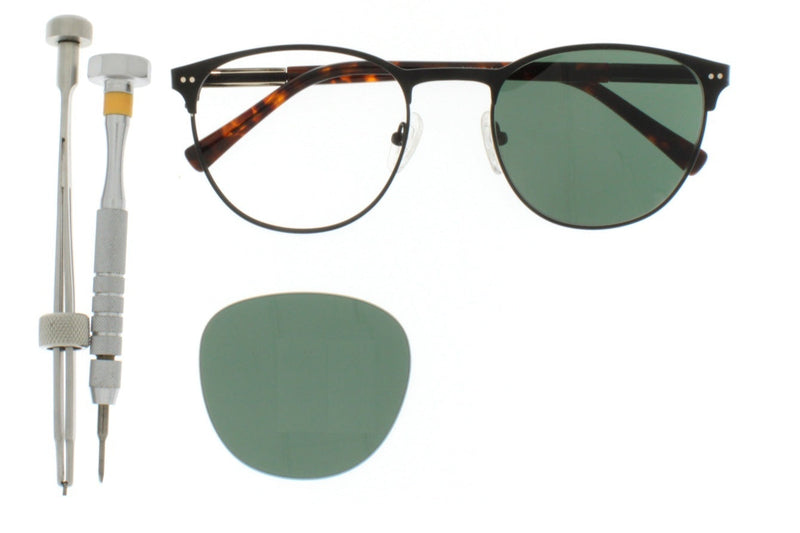
Can I replace just the lenses in my glasses and keep my frames?
Love your frames, but the lenses are scratched or your prescription has changed? New lenses can be fitted into the frames you...

Blue light and BlueBlock glasses: what does the research show?
What research says about BlueBlock glasses, eye strain and sleep, and why Relenser does not recommend extras without convincing evidence.